In the opening speech at the workshop, Dr. Juan Carrique-Mas, the FAO representative in Vietnam, proclaimed that, rinderpest is one of the most dangerous transboundary animal diseases responsible for the death of millions of livestock and wildlife globally, resulting in dire economic losses, hunger, and representing a food security threat to many countries. In spite of its complete eradication, virus collections are still stored in several laboratories, posing a risk of reintroduction of the virus. FAO collaborates with many international and regional organizations to promote communication activities to raise awareness among communities about the risk of emergence of rinderpest and other transboundary animal diseases.
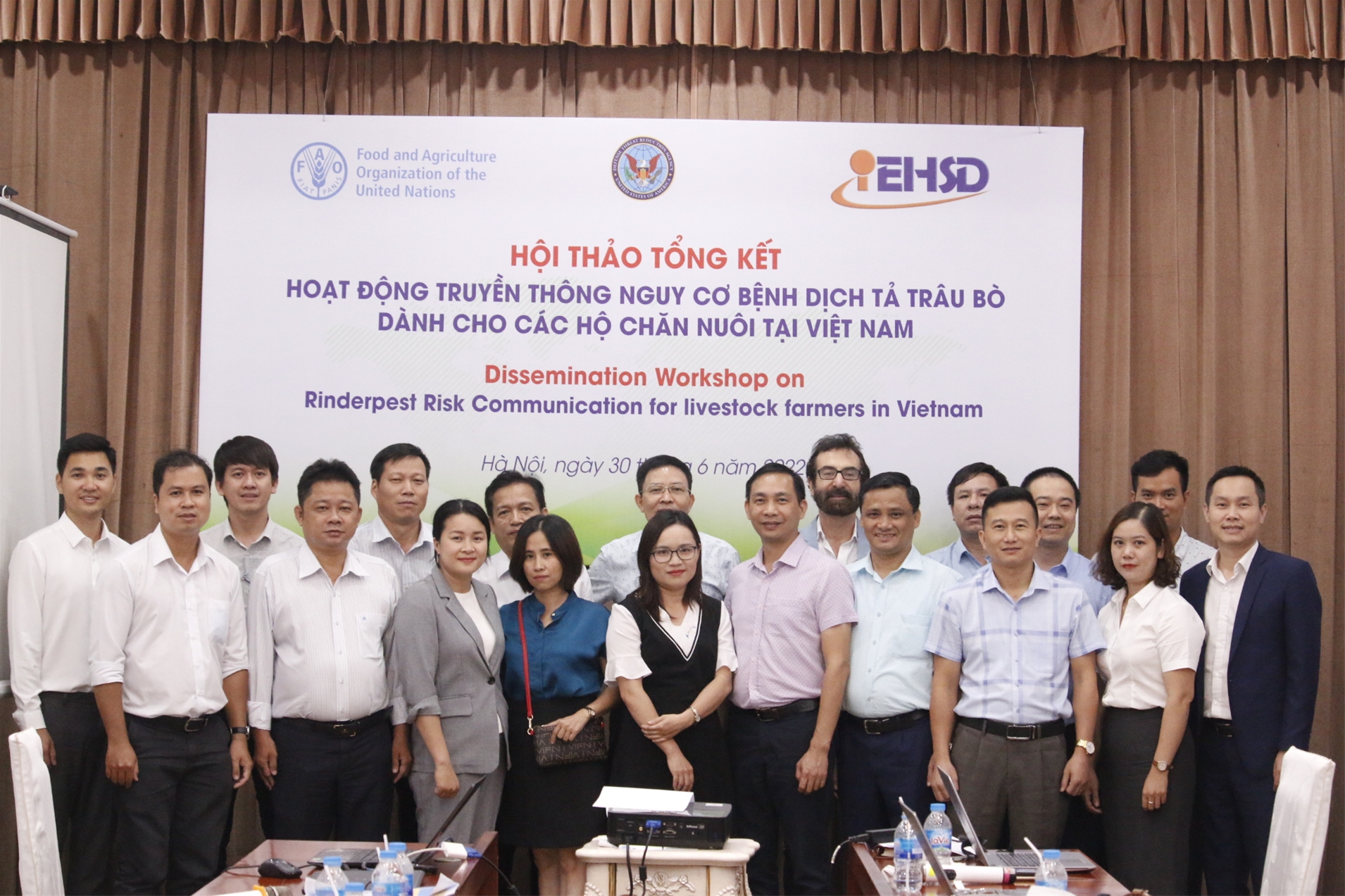
Dissemination Workshop on Rinderpest Risk communication
In the Report on Rinderpest risk communication strategy for livestock farmers in Vietnam, Dr. Pham Duc Phuc, Director of IEHSD, stated that there are potential risk of disease spread either intentionally or unintentionally when rinderpest virus samples are stored in laboratories from a bio-security perspective.
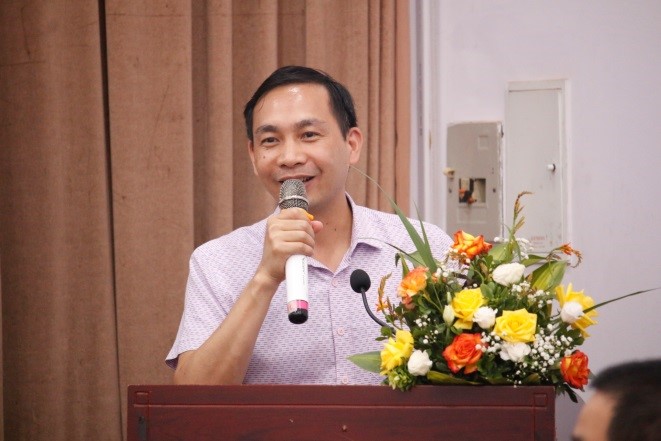
Dr. Pham Duc Phuc speaking at the Conference
According to Dr. Phuc, rinderpest risk communication activities in Vietnam target 3 main groups of beneficiaries: (i) Veterinary and animal husbandry organizations and agencies; (ii) Veterinarians and local animal health workers; (iii) Cattle raising farmers.
According to the workshop's final report, there were 58 veterinary staff and local animal health workers in Buon Ho town, Dak Lak province, and Ba Tri district, Ben Tre province participated in TOT training courses. These courses were organized to raise awareness among animal health workforce about rinderpest as well to strength their communication capacity.
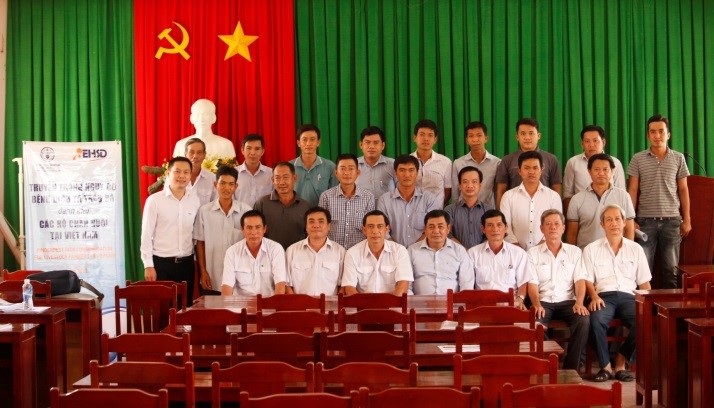
T.O.T training at Ba Tri, Ben Tre
The participants of this training courses not only gained information and knowledge of rinderpest and emerging transboundary animal diseases, but also enhanced communication techniques, community engagement. After completing the training courses, veterinary staff and local animal health workers conducted communication campaigns in 4 communes with around 240 farmers attended.
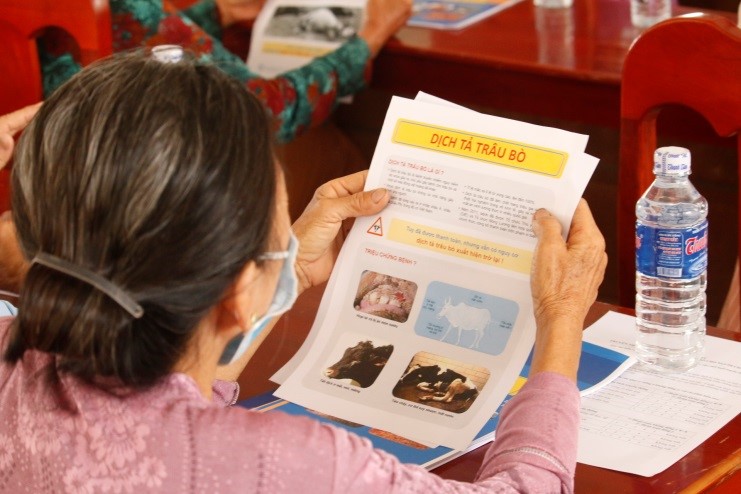
Farmers learn about the disease at a community communication session
Based on the result of post communication evaluation, 80% of cattle raising farmers know how to contact local animal health workers to report animal diseases as well choose the most effective and appropriate methods of animal disease prevention and control in livestock.
The dissemination workshop created a channel for many veterinary staff and local animal health workers from different regions in Vietnam that they are available to exchange and share their knowledge and operational experiences. "It was the first time veterinary staff from sub-Department of Animal Health and Livestock in Dak Lak province achieved One Health approach that used in rinderpest risk communication and community engagement activities. Additionally, this was also the first time that veterinary staff from the provincial, district levels and local animal health workers participated in the TOT training course, directly exchanged the knowledge and information, engaged in focus group discussions, and developed community communication campaigns." - Ms. Le Thi Hong Ngan - a staff of sub-Department of Animal Health and Livestock in Dak Lak province said
Since rinderpest was eradicated for a relatively long time in Vietnam, according to Ms. Tran Thi Theu, Deputy Head of Animal Husbandry and Veterinary Station in Buon Ho town, Dak Lak province, most cattle raising farmers and local animal health workers do not know this animal disease.
Ms. Theu confirmed that rinderpest risk communication activities not only raised the public awareness about rinderpest and other transboundary emerging animal diseases but also created opportunities for veterinary staff and local animal health workers and other stakeholders practice their communication skills. Information education and communication materials such as poster, booklet and leaflet on rinderpest in Vietnamese and E De languages helped ethnic minorities better understand rinderpest and how to prevent and control diseases in livestock as well as contact local officials and authorities.

Officers of Buon Ho Veterinary and Husbandry station.
At the end of the workshop, the delegates agreed that transboundery animal disease risk communication strategies should be strengthened and expanded further to provide information and knowledge to cattle raising farmers and to improve the capacity of animal health workforce in Vietnam to detect and respond to infectious disease outbreaks and control disease impacting health security.