On 29 October 2026, a delegation from the International Livestock Research Institute (ILRI), the Institute of Environmental Health and Sustainable Development (IEHSD) and Thai Nguyen University of Agriculture and Forestry (TUAF) conducted a preliminary visit to Thai Nguyen province to launch the initiative “ILRI-IEHSD partnership in One Health research and operationalization” (Vietnam One Health Lab). Following a day of discussions with provincial departments and agencies and the two local administrations, the partners agreed to select Gia Sang and Tan Khanh commune as locations for establishing One Health field sites.
Morning at TUAF: Provincial consultation
At Thai Nguyen University of Agriculture and Forestry, Dr Pham Duc Phuc, Director of IEHSD, presented an overview of the initiative, the rationale for selecting Thai Nguyen and a SWOT analysis. The province was selected because of its high livestock density, numerous slaughterhouses and small-scale markets, and TUAF’s role as a foundation for training and human resources. A SWOT analysis of the existing intersectoral coordination framework showed that cooperation currently remains largely bilateral, between the human health and veterinary sectors. The initiative team highlighted the need to expand participation to include environmental management, forest protection, food safety and antimicrobial resistance.
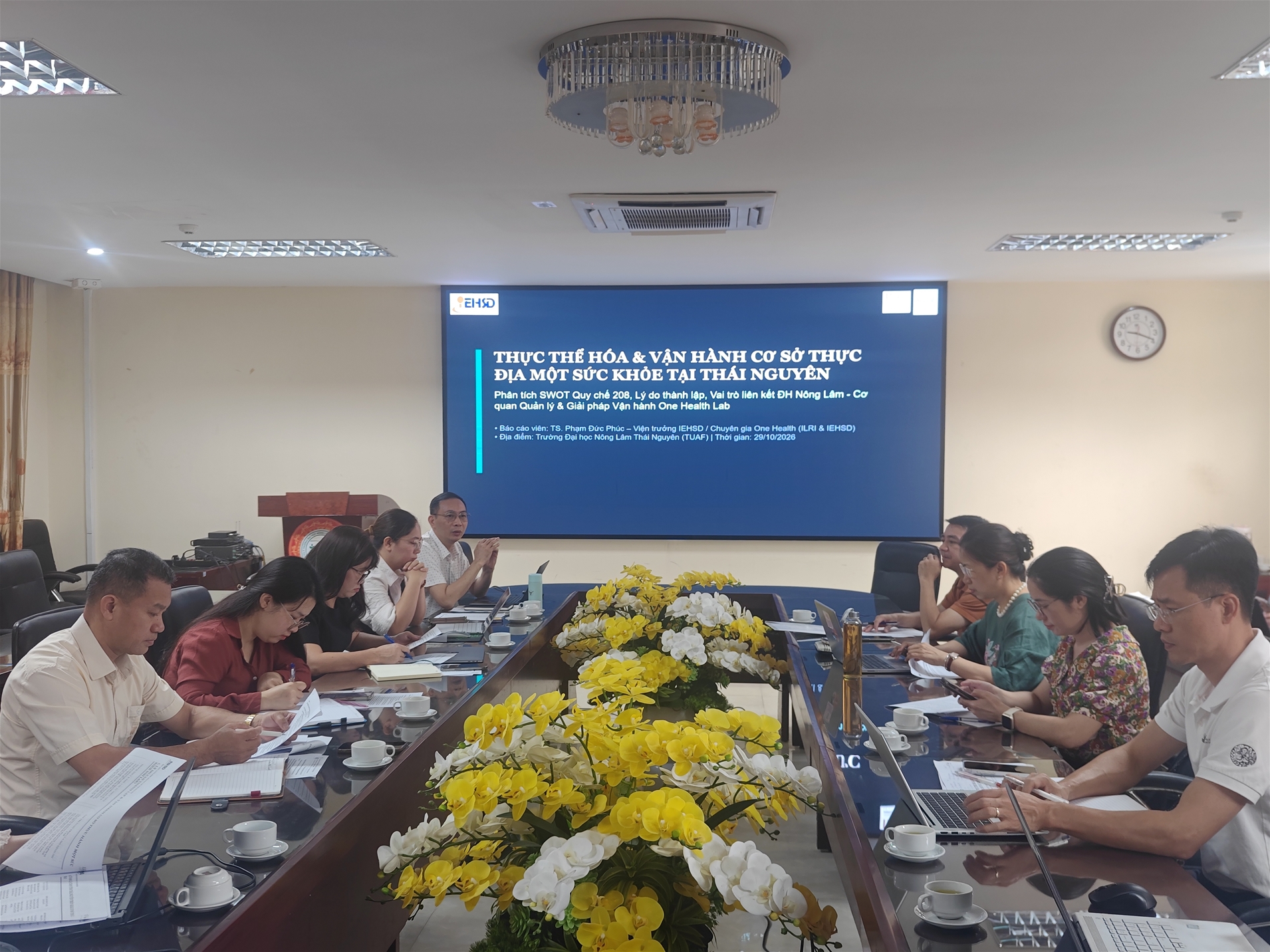
Provincial consultation meeting at TUAF
The meeting brought together representatives of ILRI, IEHSD, TUAF, the Department of Health, the Department of Agriculture and Environment, the provincial Center for Disease Control (CDC), the Sub-Department of Livestock Production, Animal Health and Fisheries, the Forest Protection Sub-Department and other technical units. Several points were highlighted. The provincial CDC noted that the two proposed locations do not overlap with the six communes supported by the EPIC project, allowing support to reach additional communities. The Sub-Department of Livestock Production, Animal Health and Fisheries described challenges arising from the lack of dedicated veterinary staff in many communes, while slaughter inspection remains a provincial responsibility. The Forest Protection Sub-Department highlighted gaps in coordination for managing wildlife breeding facilities, noting that some captive species may carry pathogens even in small-scale operations.
The meeting concluded with agreement on three points: (1) activities must have a clear legal basis, and participating agencies should promptly provide the latest legal documents to inform the drafting of standard operating procedures (SOPs); (2) training and communication activities may be organized jointly to make the best use of resources, with expenditure accounted for separately by each sector; and (3) Gia Sang and Tan Khanh commune were selected for further consultation and assessment to establish the field sites.
Afternoon in Gia Sang and Tan Khanh commune
During meetings with the ward and commune leadership, representatives of IEHSD, TUAF and ILRI introduced the initiative and sought local views on hosting it. The team explained the importance of intersectoral coordination through a One Health approach, emphasizing that the initiative would not add to the workload of local staff.
Gia Sang representatives reported that the ward has approximately 3,350 livestock-keeping households and eight small- and medium-scale farms. Its total animal population is approximately 213,300: 2,100 buffaloes and cattle, 7,500 pigs, approximately 200,000 poultry, and 3,700 dogs and cats. The ward has reported no dangerous infectious animal diseases, and vaccination coverage exceeds 80%. However, its grassroots veterinary workforce remains limited, with only three community veterinary collaborators.
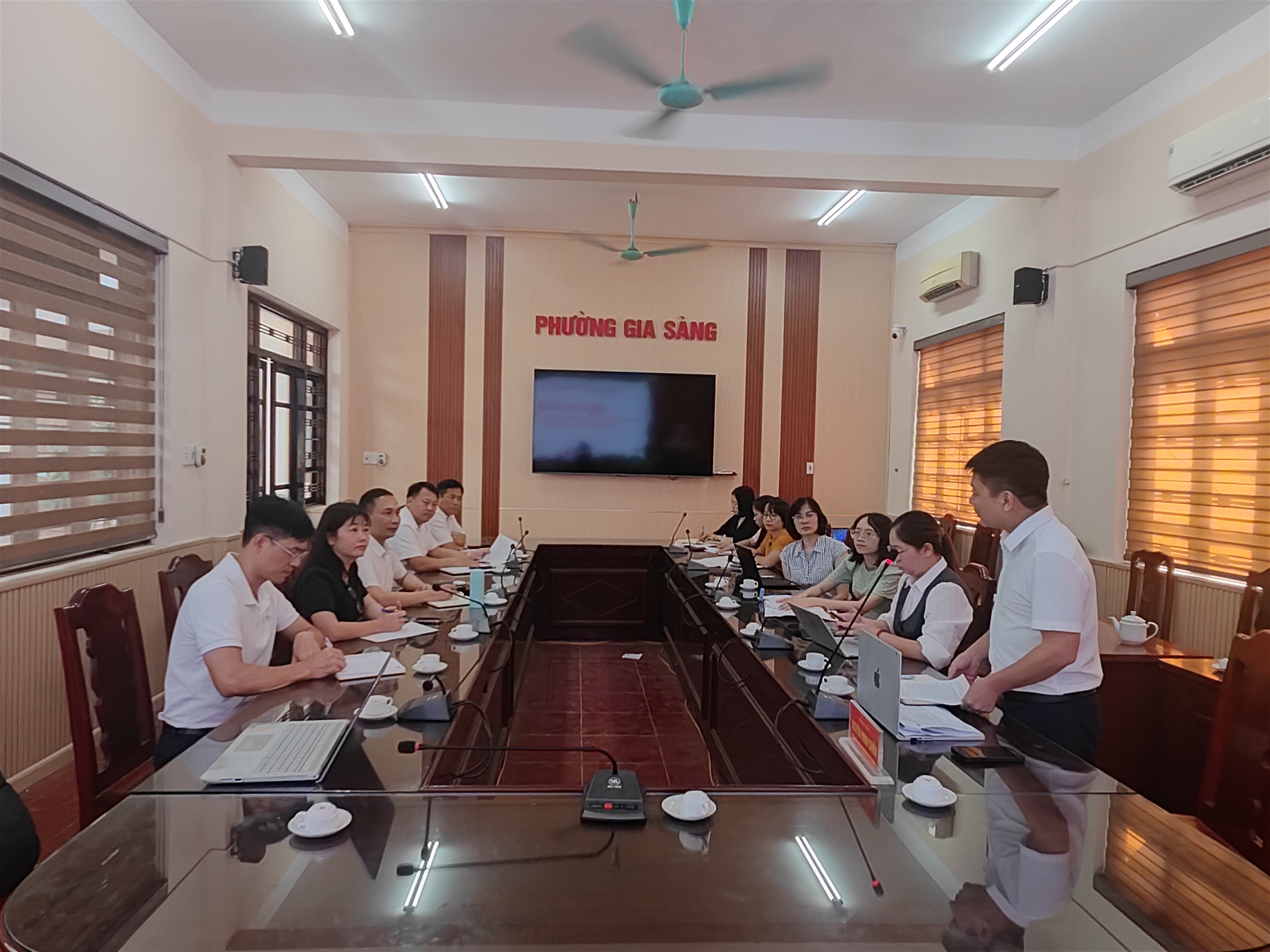
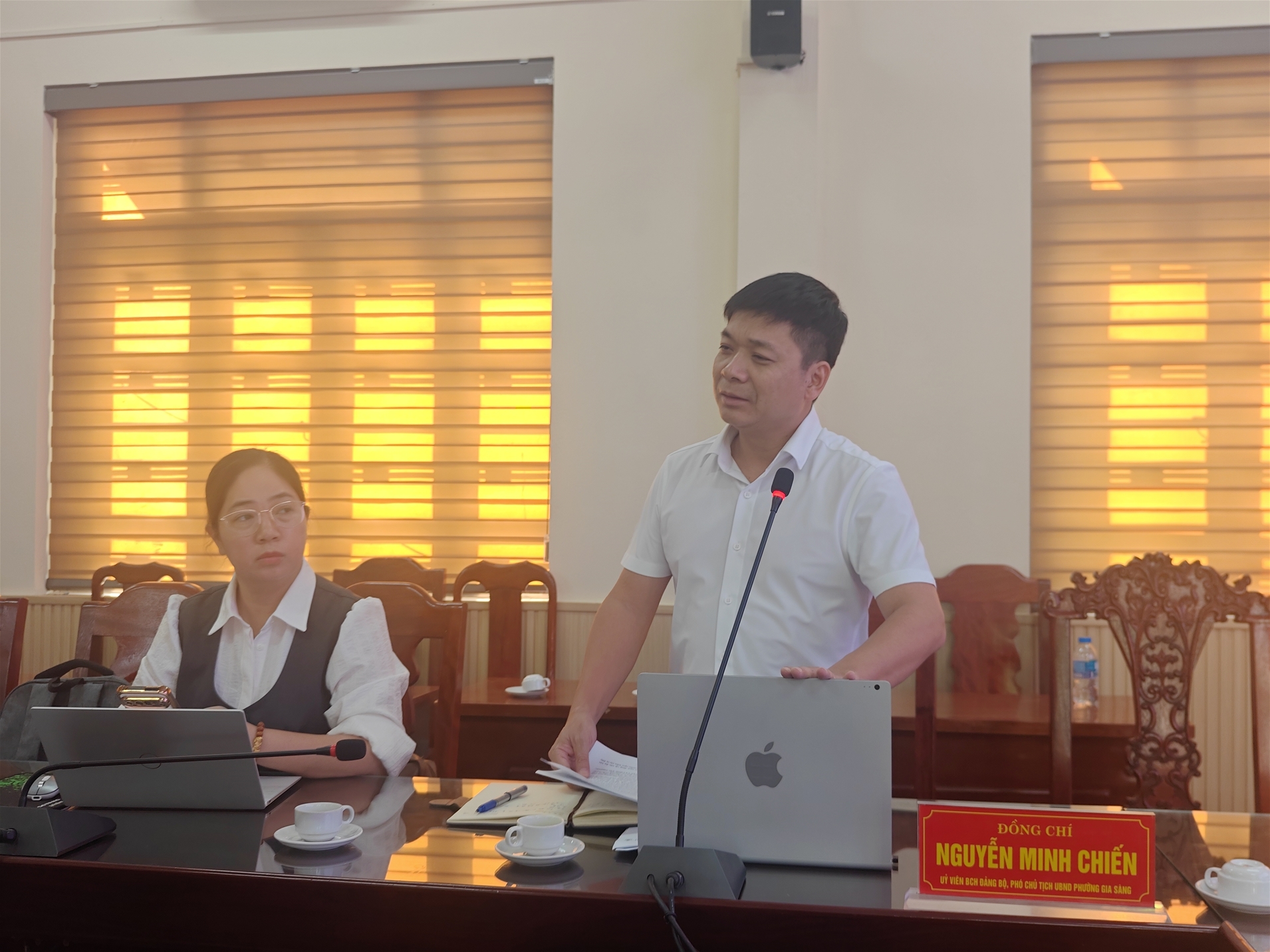
Working visit to Gia Sang. Left: the meeting venue. Right: Mr Nguyen Minh Chien, Vice-Chairman of the Gia Sang Ward People’s Committee, presents an overview of livestock production in the ward.
At the Gia Sang meeting, ward leaders expressed support for the initiative while stressing the importance of avoiding additional demands on already overstretched staff and ensuring that all legal requirements and procedures are met.
Tan Khanh representatives reported that the commune ranks second in the province for livestock population and production, with 1.3 million chickens, more than 7,000 buffaloes and cattle, approximately 6,000 dogs, and 63,000 pigs. In 2026, the commune allocated funding for vaccination, achieving 90–100% of planned compulsory vaccination targets against dangerous infectious diseases. No outbreaks of dangerous diseases in livestock or poultry were reported during the first nine months of the year.
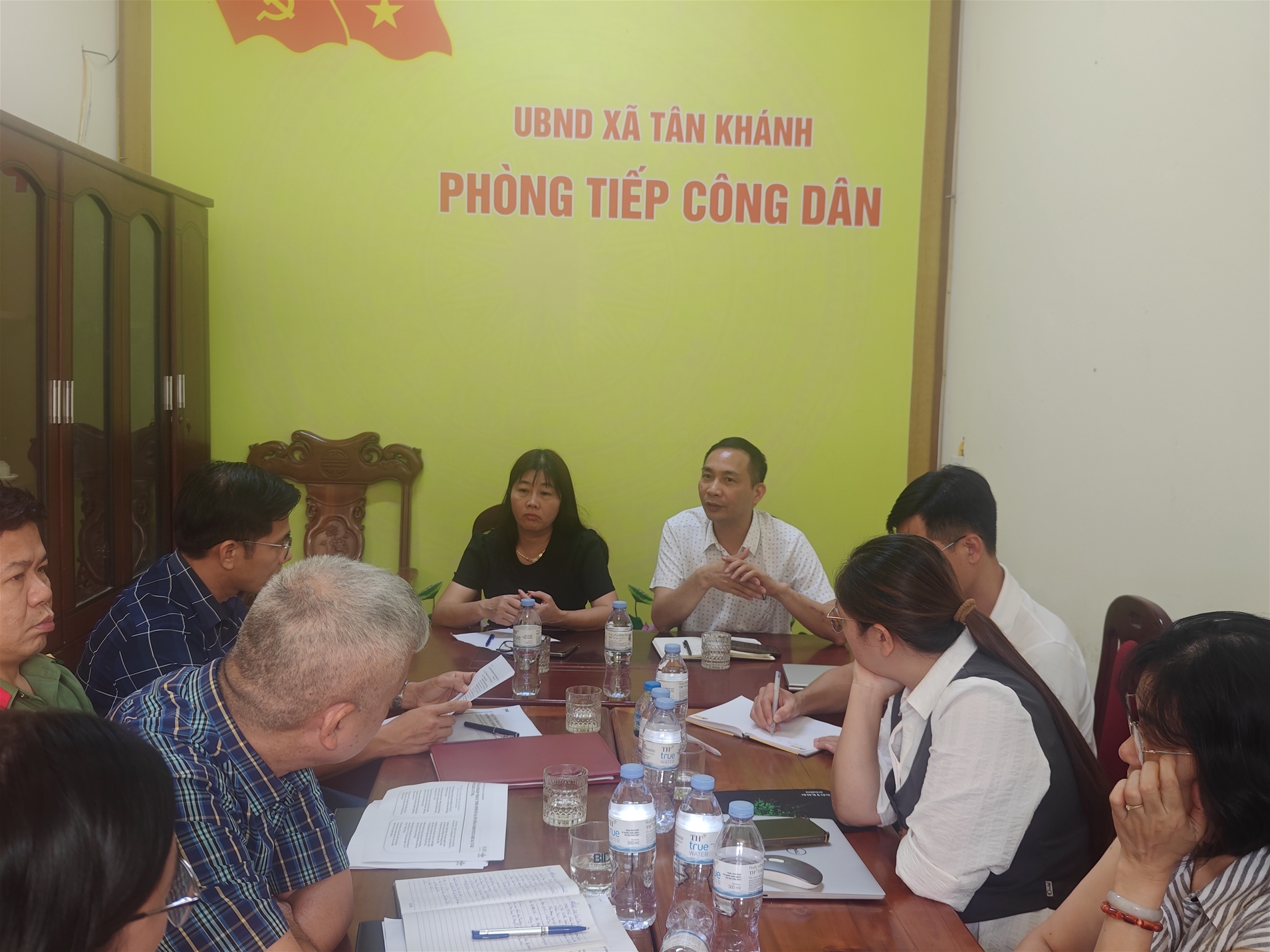
Working visit to Tan Khanh
At the Tan Khanh meeting, commune representatives identified dog rabies vaccination as the clearest bottleneck: only 2,500 doses had been administered to approximately 6,000 dogs at the beginning of 2026. They attributed this shortfall to limited funding rather than a lack of awareness and highlighted the need for additional resources. Rabies also illustrates the importance of intersectoral coordination: the human health sector addresses communication, vaccines and immunoglobulin for people, while the veterinary sector focuses on dogs and cats.
Leaders in both Gia Sang ward and Tan Khanh commune agreed on the need to strengthen intersectoral coordination and recognized the benefits of investing in disease prevention rather than responding after outbreaks occur. Both localities agreed to host the initiative as One Health field sites and will appoint focal points to coordinate activities.